CM Punjab Free Solar Panel Scheme 2026 Online Registration & Eligibility Guide

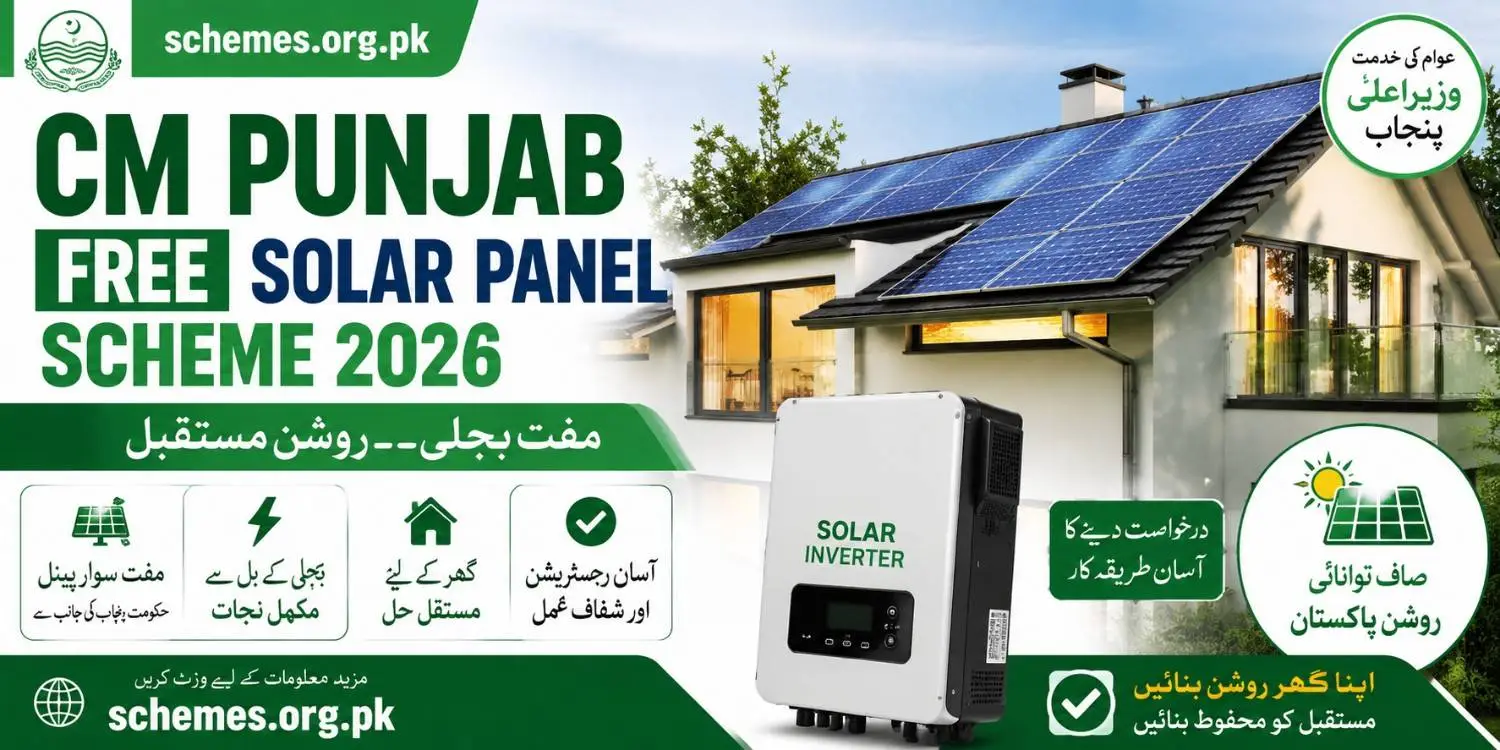
Electricity prices in Pakistan have surged dramatically over the past few years, putting immense financial pressure on households. For many families in Punjab, monthly electricity bills now consume a significant portion of their income. In response to this growing crisis, the Government of Punjab has introduced the CM Punjab Free Solar Panel Scheme 2026 a groundbreaking initiative aimed at providing free solar systems to eligible households.
Also read: CM Punjab Electric Bike Scheme 2026 Apply Online Eligibility & Installment Guide
What Is the CM Punjab Free Solar Panel Scheme 2026?
The CM Punjab Free Solar Panel Scheme 2026 is a government-funded initiative designed to provide free solar energy systems to deserving households across Punjab province. Building on the foundation laid by the Roshan Gharana Program (initially launched in 2024) and other solar energy projects, the 2026 iteration aims to significantly expand coverage, improve system quality, and streamline the distribution process.
Key Objectives of the Scheme
- Reduce electricity costs for low-income and middle-class families
- Decrease dependence on the national grid and imported fossil fuels
- Promote clean, renewable energy to combat climate change
- Eliminate load-shedding for participating households
- Stimulate local economic growth by creating jobs in the solar energy sector
- Empower rural communities with reliable access to electricity
The program is being administered by the Punjab Energy Department in collaboration with the National Database and Registration Authority (NADRA), the Benazir Income Support Programme (BISP) database, and various private-sector solar installation partners.
Key Features
Here’s a quick overview of what the scheme offers:
| Feature | Details |
|---|---|
| Target Audience | Low-income & deserving households |
| Coverage Area | All districts of Punjab |
| System Capacity | 550W to 3kW |
| Cost | Fully free for most beneficiaries |
| Application Mode | Online & SMS registration |
| Installation | Government-approved vendors |
| Warranty | 10–25 years (depending on components) |
Eligibility Criteria for free Solar Panel Scheme 2026
Understanding eligibility is crucial before applying.
Who Can Apply?
You may qualify if you:
- Are a permanent resident of Punjab
- Have a valid CNIC
- Consume up to 200 electricity units per month
- Belong to a low-income family
- Are registered with BISP or Ehsaas (preferred)
- Own the house where solar panels will be installed
Who Is Not Eligible?
- Government officers above a certain pay grade
- Households consuming high electricity units
- Commercial or industrial users
- Individuals who already received government solar benefits
Types of Solar Systems Provided
The government provides systems based on household electricity consumption.
| Monthly Units | System Size | Ideal For |
|---|---|---|
| 0–50 Units | 550W–1kW | Basic lighting & fans |
| 50–100 Units | 1kW–2kW | Fans, lights, refrigerator |
| 100–200 Units | 2kW–3kW | Full household usage |
How to Apply for the CM Punjab Free Solar Panel Scheme 2026
The application process has been designed to be as accessible as possible, combining digital platforms with in-person options for those who may not have internet access.
Step-by-Step Application Process
Step 1: Check Your Eligibility
- Checking your BISP/Ehsaas registration status via the 8171 SMS service
- Confirming your electricity consumption from your latest WAPDA/LESCO/MEPCO/FESCO bill
- Ensuring your CNIC is valid and active
Step 2: Online Application
- Visit the official Punjab Solar Panel Scheme portal
- Enter your CNIC number and mobile number
- Fill in the required details: name, address, district, electricity reference number, household size
- Upload scanned copies of your CNIC (front & back) and latest electricity bill
- Submit the application and note your tracking ID
Step 3: SMS-Based Application
For those without internet access:
- Send your CNIC number to the designated short code (e.g., 8818)
- You’ll receive a confirmation message with your application status
Step 4: Verification Process
- NADRA and BISP databases will cross-verify your information
- Field teams may visit your home for physical verification
- Your electricity consumption data will be verified through DISCO (Distribution Company) records
Step 5: Approval and Installation
- Approved applicants receive an SMS notification
- A certified installation team is assigned to your area
- Installation is typically completed within 2–4 weeks of approval
- A post-installation inspection is conducted to ensure system quality
Important Documents Required
- Original CNIC (and photocopy)
- Latest electricity bill (within 3 months)
- Proof of property ownership (utility connection in applicant’s name)
- BISP registration proof (if applicable)
- Passport-size photographs (2 copies)
- Mobile number registered against your CNIC
Frequently Asked Questions
Q1: Who is eligible for CM Punjab Free Solar Panel Scheme 2026?
A: Residents of Punjab with valid CNICs, low electricity consumption (up to 200 units), and low-income status are eligible.
Q2: Is the solar panel system completely free?
A: Yes, for most approved beneficiaries the system is fully subsidized by the Punjab government.
Q3: How can I apply for the Punjab Solar Panel Scheme 2026?
A: You can apply through the official government website or via SMS if announced.
Q4: How long does approval take?
A: Approval and installation may take 4–12 weeks depending on verification and district quota.
Q5: What capacity solar system will I receive?
A: System size depends on your monthly electricity consumption (550W–3kW).Conclusion: Should You Apply?
Conclusion
The CM Punjab Free Solar Panel Scheme 2026 offers a rare opportunity to eliminate high electricity costs, gain energy independence, and contribute to a cleaner environment all at zero cost.With limited quotas and high demand, early application increases your chances. Ensure your documents are complete and apply only through official channels. Solar power is no longer a luxury it’s becoming a necessity. And this scheme makes it accessible to those who need it most.